In spring 2025, Tewkesbury Voices was honoured to host a rare 1834 Abolition Medal, on loan from Bolton Library and Museum Services. Given to around 800 schoolchildren in Tewkesbury to mark the end of slavery in the British Empire, the medal helped young people connect with a major moment in history. Though the medal has now returned to Bolton, this page shares its story and why it still matters today, for Tewkesbury and beyond.
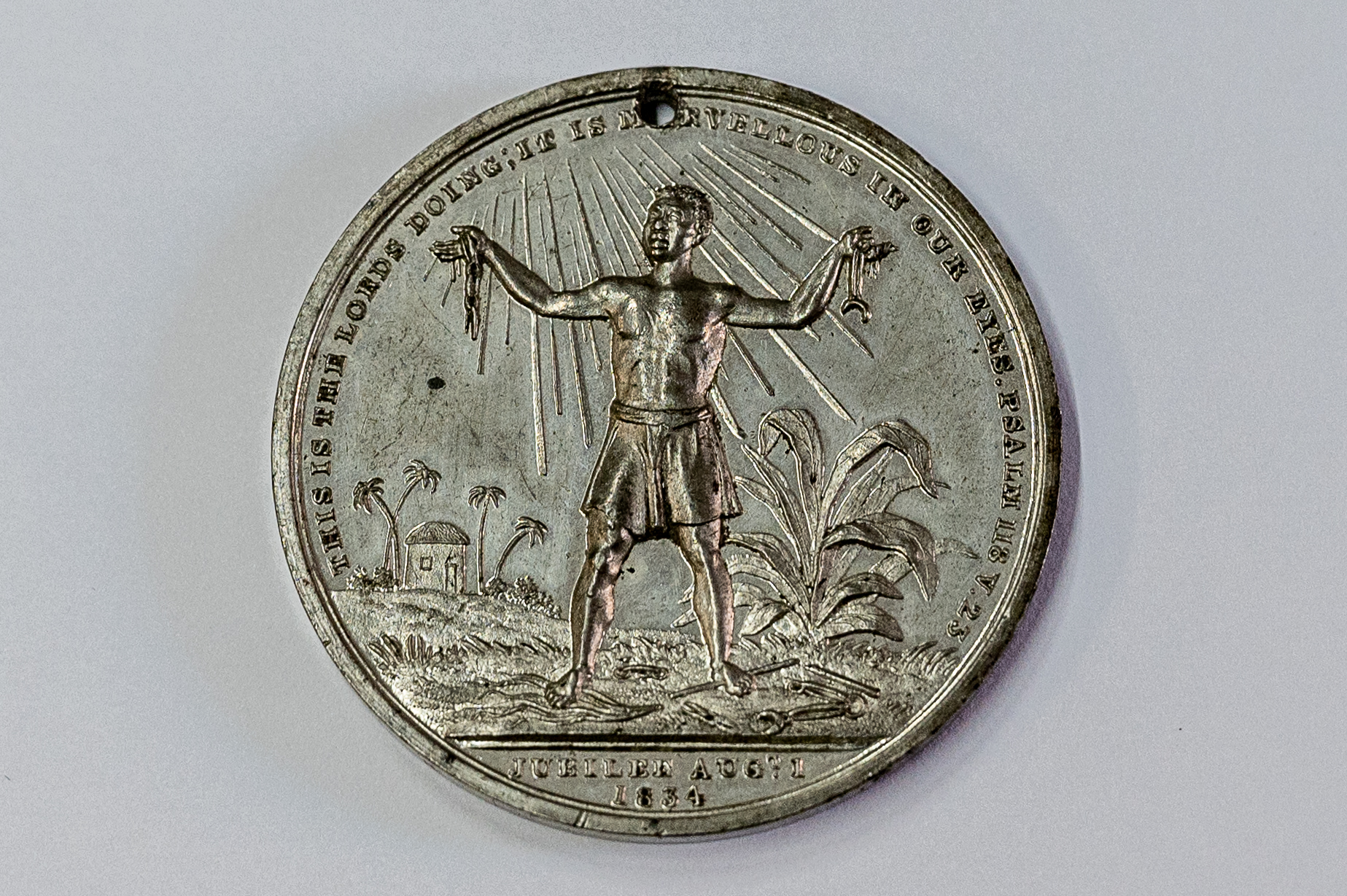
Reproduced courtesy of Bolton Library and Museum Services (BOLMG:1901.19.35.1).
On the official date of the abolition of slavery in British Colonies, 1st August 1834, various events were held throughout the country in celebration.
A substantial dinner of roast beef, plum pudding and beer was given to the whole of the children in National, British, and Sunday Schools of this borough, in celebration of the day on which slavery ceased in our colonies. The dinner was served up in the market-house [where the Tewkesbury Methodist Church now stands] by Mr. John Edwards, landlord of the Cross-Keys Inn [11 High Street]. The children amounting to upwards of eight hundred afterwards paraded the principal streets of the town, accompanied by their teachers; each of them wore a neat and appropriate medal, which had been presented to them on the occasion; and they appeared highly delighted with their day’s entertainment.1
James Bennett, Tewkesbury’s contemporary commentator and historian.
An example of the medal is held by Bolton Art Gallery, Library & Museum who have it described as the medal distributed in Tewkesbury. It was manufactured by “Davis” of Birmingham and is probably a generic design produced and used in other places as well as Tewkesbury.
Front of the Medal
Reproduced courtesy of Bolton Library and Museum Services (BOLMG:1901.19.35.1).
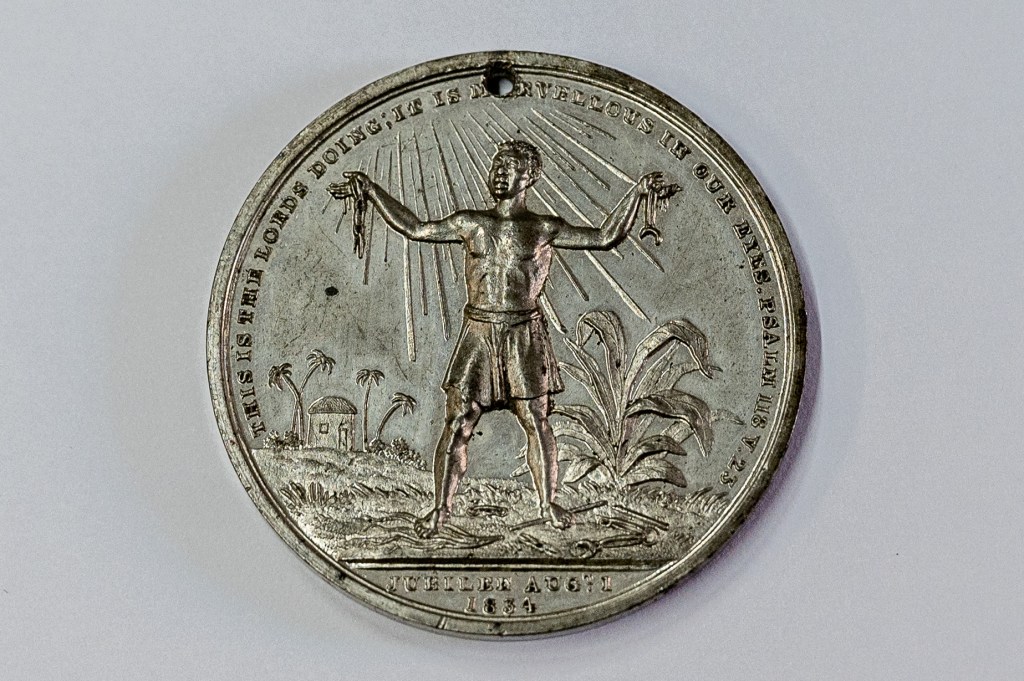
One side depicts a freed slave standing beneath radiant beams of light. His arms are raised to heaven, and he holds broken manacles. Under his feet lies a broken whip and shattered manacles are strewn around him. The broad-leaved plant next to him is either tobacco or sugar cane. The inscription around the edge of the medal reads:
This is the Lord’s doing; It is marvellous in our eyes. Psalm 118 v. 23.
Jubilee Augt 1 1834
Back of the Medal

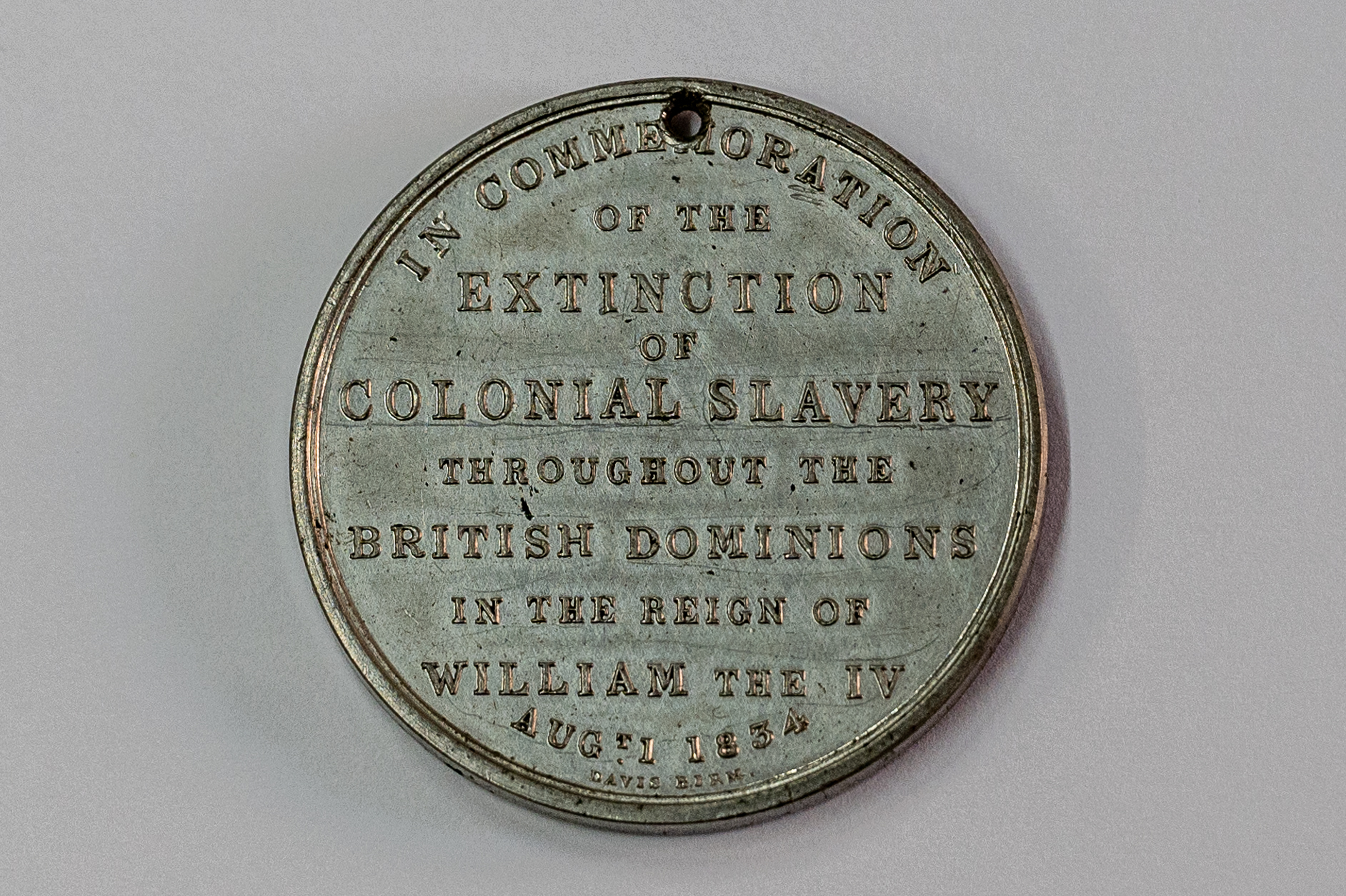
Reproduced courtesy of Bolton Library and Museum Services (BOLMG:1901.19.35.1).
In commemoration of the extinction of colonial slavery throughout the British Dominions in the reign of William IV.
Augt 1 1834. Davis Birm.
There is a small hole in the top of the medal so that it can be worn.2
A published article on Anti-Slavery Activism in Tewkesbury by Derek Benson is available to read online and download. This article features in the Tewkesbury Historical Society Bulletin 34 Magazine and is also available for purchase as a stand alone copy at £4. Please contact us to purchase one.
 Tewkesbury Voices