By John Dixon MPhil
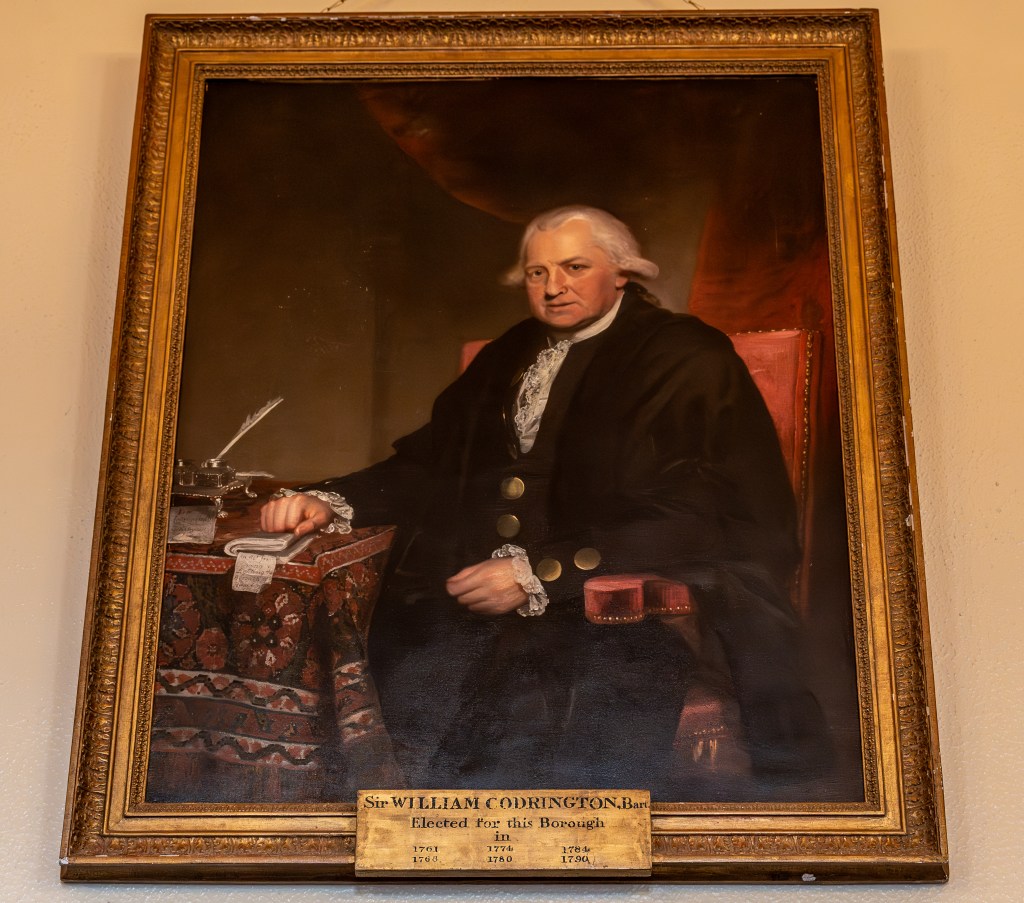
As a local historian, I first learned of the Codrington story over two decades ago, with Sir William (1719 – 1792) as an aristocratic MP for Tewkesbury and as a very important slave owner of the West Indies.
When I retired in 2001, my first overseas trips were to Barbados (2003) and Antigua (2004) to learn as much as possible about the remnants of the Codrington sugar estates. Below is an overview of my research.
- The Codringtons were political refugees from the Civil War who pioneered, in partnership, the industrialisation of sugar production in the West Indies using African enslaved labour. At the time, this was an accepted practice, although it is certainly not the case today.
- One member of the family used part of his wealth to establish Codrington College in Barbados and donated money to All Souls College in Oxford. How the college developed, remains a subject of controversy today.
- Sir William Codrington reputedly, by loan or gift, provided the finance for the new, and first, Town Hall in Tewkesbury in 1788.
- Sir William’s death in 1792 caused a by-election, which was controversial since the Codrington nominee was opposed by a candidate sponsored by the Anti-Slavery movement. The latter did not win but forced a compromise by the election of a Dowdeswell relation who promised:
I do hereby hold myself bound to support the said (anti-slavery) petition with every exertion in my power; and I do further declare, that whenever a Petition is presented to Parliament from this Borough, for the purpose of putting an end to that unnatural traffic, I will, should I have the honour of being returned your Representative, use every means in my power to promote the success of such petition or motion.
Dowdeswell was elected.
- The Codringtons continued their sugar estates until Emancipation in 1834. Derek Benson has explained the role of Tewkesbury Citizens, mainly non-conformists, along with sympathetic Whig politicians, in campaigning against slavery.
- In 1834 school children in Tewkesbury were presented with a medal to commemorate Emancipation. The medal was discovered in Bolton but is on loan to Tewkesbury from March to June 2025.
- Emancipation was passed by Parliament partly after slave rebellions and slave owners were promised compensation for losing their slaves. Amongst thousands of others, the Codringtons received compensation.
- Those enslaved received no compensation and suffered from a downturn in the sugar market, partly caused by the Sugar Duties Acts in 1846. This can be argued to be the long-term cause of the migration of the Windrush generation to the UK and elsewhere after World War II. The Kirton family, who moved to Tewkesbury, was our local, early 20th century example.
- The Codrington family was typical of former slave owners whose estates declined. They deserted “difficult” Boroughs like Tewkesbury to be MPs for county seats. The family lost its wealth in c. 1948, partly due to an expensive divorce case, and their home is now owned by Sir James Dyson.
- The Codringtons declined as a leading political family in Tewkesbury. The financial burden following the building of the 1788 Town Hall caused, in part, the bankruptcy of the old Borough Council whose members caused the expansion the of Town Hall with the frontage we treasure today.
 Tewkesbury Voices